
Mulch or Gravel? How to Choose the Right Ground Cover for Your Yard
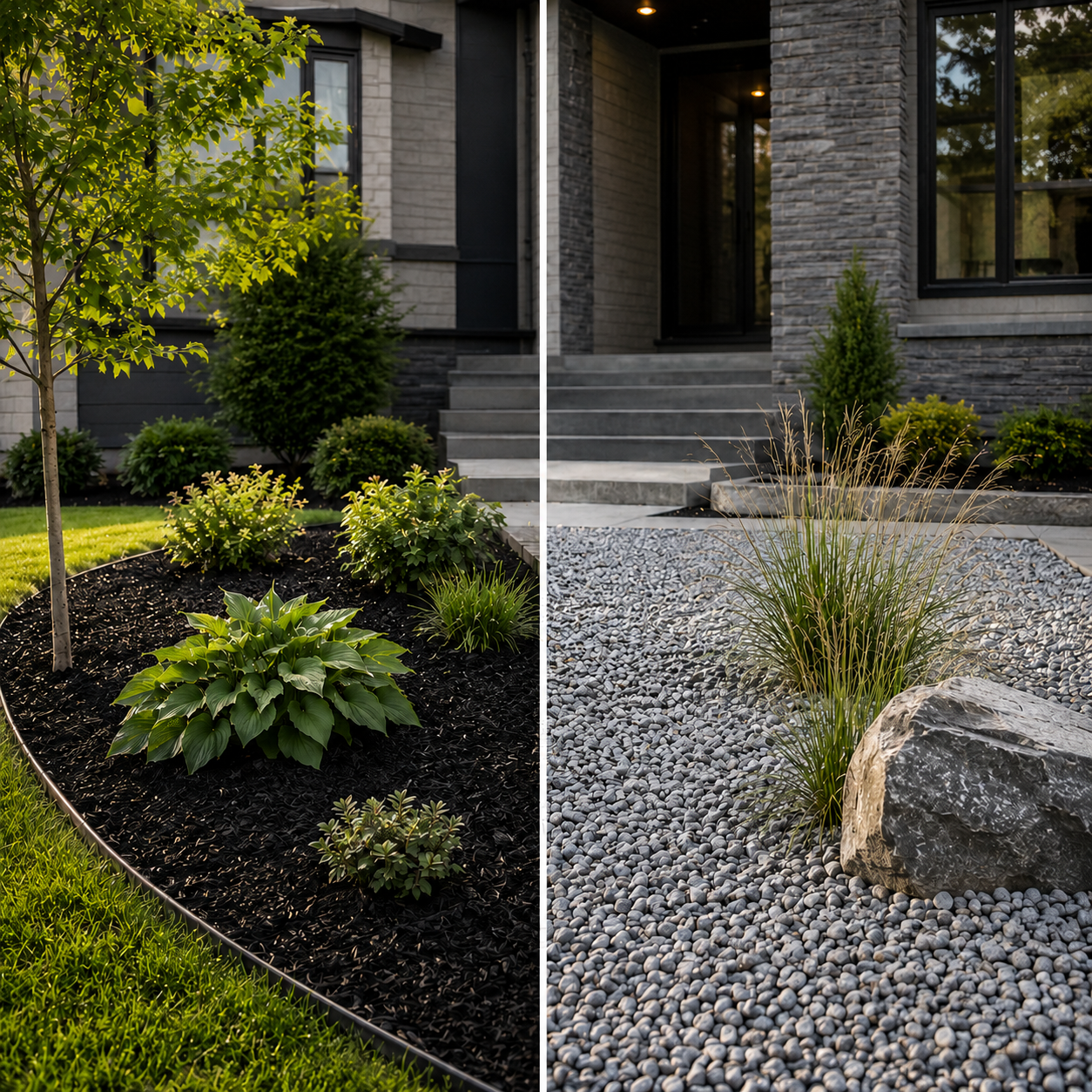
Whether you're refreshing your front yard, creating a low-maintenance garden bed, or redesigning your backyard — one of the most common questions homeowners ask is: should I use mulch or gravel?
Whether you're refreshing your front yard, creating a low-maintenance garden bed, or redesigning your backyard — one of the most common questions homeowners ask is: should I use mulch or gravel?
Both options serve a purpose. Both can look great. But they behave very differently, and choosing the wrong one can cost you time and money down the road. This guide breaks down everything you need to know so you can make the right call for your property. What Is Mulch (Wood Chips)?
Mulch is an organic ground cover made from shredded or chipped wood, bark, leaves, or compost. The most common types you'll see in Edmonton-area yards are:
Cedar mulch — naturally insect-resistant, pleasant smell, reddish-brown colour Hardwood mulch — dark, rich look; great for garden beds Pine bark nuggets — chunky texture, good drainage Black or dyed mulch — bold colour contrast against green plants
Benefits of Mulch
Great for plants. This is mulch's biggest advantage. As it breaks down, it adds nutrients back into the soil, improves soil structure, and encourages healthy root growth. If you have trees, shrubs, or perennial flower beds, mulch is almost always the better choice.
Retains moisture. A 3–4 inch layer of mulch acts like a blanket over the soil — it slows down evaporation, which means you water less often. In Edmonton's hot, dry summers, this can make a real difference.
Suppresses weeds. By blocking sunlight from reaching the soil, mulch significantly reduces weed growth. You'll still get some weeds, especially from seeds blown in by wind, but far fewer than bare soil.
Insulates roots in winter. Alberta winters are brutal. Mulch helps protect plant roots from freeze-thaw cycles, which are common in our climate and can damage root systems.
Affordable upfront. Mulch is generally cheaper than gravel per cubic yard, which makes it an attractive option for covering large areas on a budget.
Downsides of Mulch
It breaks down and needs replacing. This is the main trade-off. Organic mulch decomposes over time — typically you'll need to top it up every 1–3 years. That's ongoing cost and effort.
Can attract insects. Moist wood chips can be a habitat for earwigs, ants, and in some cases carpenter ants if mulch is piled directly against your home's foundation. Keep it 6 inches away from your house.
Can wash or blow away. On slopes or in windy areas, lighter mulch can shift after heavy rain or strong winds.
Fades in colour. Especially true for dyed mulch — it looks great in spring but can fade significantly by fall.
What Is Gravel (Decorative Stone)?
Gravel and decorative stone covers a wide range of products: pea gravel, river rock, crushed granite, lava rock, and large boulders used as accents. They're all inorganic — they don't break down, and they don't add anything to the soil.
Benefits of Gravel
Virtually maintenance-free. This is gravel's biggest selling point. Once it's in place with a proper weed barrier underneath, it can last decades without needing to be replaced. No topping up, no decomposition.
Looks sharp and modern. Gravel gives a clean, structured appearance that works beautifully in contemporary landscapes, xeriscaping designs, and around modern homes. River rock in particular adds a natural, elegant look.
Handles high-traffic areas. Gravel is durable. It works well on paths, driveways, around patios, or anywhere people walk regularly — areas where mulch would quickly get displaced.
Doesn't attract insects. Unlike wood, stone doesn't decompose and doesn't provide habitat for bugs.
Stays in place. Heavier stone doesn't blow away in the wind and holds better on slopes than mulch, especially when the pieces are larger.
Downsides of Gravel
Can get hot. Light-coloured gravel reflects heat; dark gravel absorbs it. Either way, stone around plants can create a microclimate that stresses some plant species, especially in a full-sun location in summer.
Doesn't improve soil. Gravel provides no nutritional benefit to plants. If you have garden beds with annuals or vegetables, gravel is the wrong choice.
Harder to remove. If you ever want to change your landscaping, gravel mixed into soil is a pain to deal with. Make sure it's something you want long-term.
Higher upfront cost. Quality decorative stone costs more than mulch per square foot, and installation (including the weed barrier and proper base) adds to the price.
Weeds still happen. A good landscape fabric slows weeds considerably, but it's not foolproof. Soil and debris settle on top of gravel over time, and weeds can take root in it. So Which One Should You Choose?
Choose mulch if:
You have garden beds with trees, shrubs, flowers, or perennials Healthy soil and plant growth is a priority You want a lower upfront cost and are okay with refreshing it every couple of years Your yard has a traditional or cottage-garden aesthetic
Choose gravel if:
You want a truly low-maintenance yard for the long haul The area is a path, driveway edge, or decorative zone with no planting You're doing a xeriscape or modern landscape design You want something that won't fade, wash away, or attract insects
Use both: Many of the best landscaping projects in Edmonton combine the two. Decorative stone around a patio or path, mulch in the garden beds surrounding it — you get the durability of gravel where it matters and the soil benefits of mulch where plants need it.
A Note About Edmonton's Climate
Edmonton's freeze-thaw cycles are worth factoring into your decision. Gravel can shift and heave with frost, especially smaller pea gravel on slopes. Mulch does a better job insulating soil and protecting plant roots through our cold winters — that's a real advantage in Zone 3b/4a.
On the flip side, our dry summers make mulch's moisture-retention properties extremely valuable for keeping plants healthy without constant watering.
Need Help Deciding?
At NorthCrest, we've been helping Edmonton homeowners transform their outdoor spaces for years. Whether you're starting fresh or updating an existing landscape, we can take a look at your yard and give you a straightforward recommendation — no pressure, no guesswork.
Contact us for a free consultation and let's figure out the best solution for your property.
Get a realistic price range for your yard in under two minutes — from a local Edmonton team.