Best Decking Materials for Alberta Winters: Composite vs Wood
Composite, cedar, or pressure-treated? How each decking material actually performs through -40°C winters, chinooks, and intense summer UV.
Alberta is one of the hardest climates in North America for a deck: −40°C cold snaps, mid-winter chinooks that melt and refreeze everything in a day, and summer UV strong enough to bleach wood in two seasons. Here's how the three main decking materials actually hold up — from a crew that builds and repairs them across the Edmonton region.
Pressure-Treated Wood — The Budget Option
Cost: lowest upfront. Lifespan: 10–15 years with maintenance.
Pressure-treated decking is still the cheapest way to build, but it earns that price. Boards cup, check, and splinter as they dry, and Alberta's humidity swings accelerate all three. Expect to stain every 2–3 years and replace individual boards along the way.
Cedar — Beautiful, but High-Maintenance
Cost: mid-range. Lifespan: 15–20 years with diligent care.
Cedar is naturally rot-resistant and looks stunning when freshly oiled. The catch: our UV is brutal on it. Skip two seasons of maintenance and cedar goes grey and soft-surfaced. If you love the look and accept the upkeep, it's a fine choice — just budget the time or the maintenance contract.
Get a realistic price range for your yard in under two minutes — from a local Edmonton team.
Composite — Built for This Climate
Cost: highest upfront. Lifespan: 25–50 years, virtually maintenance-free.
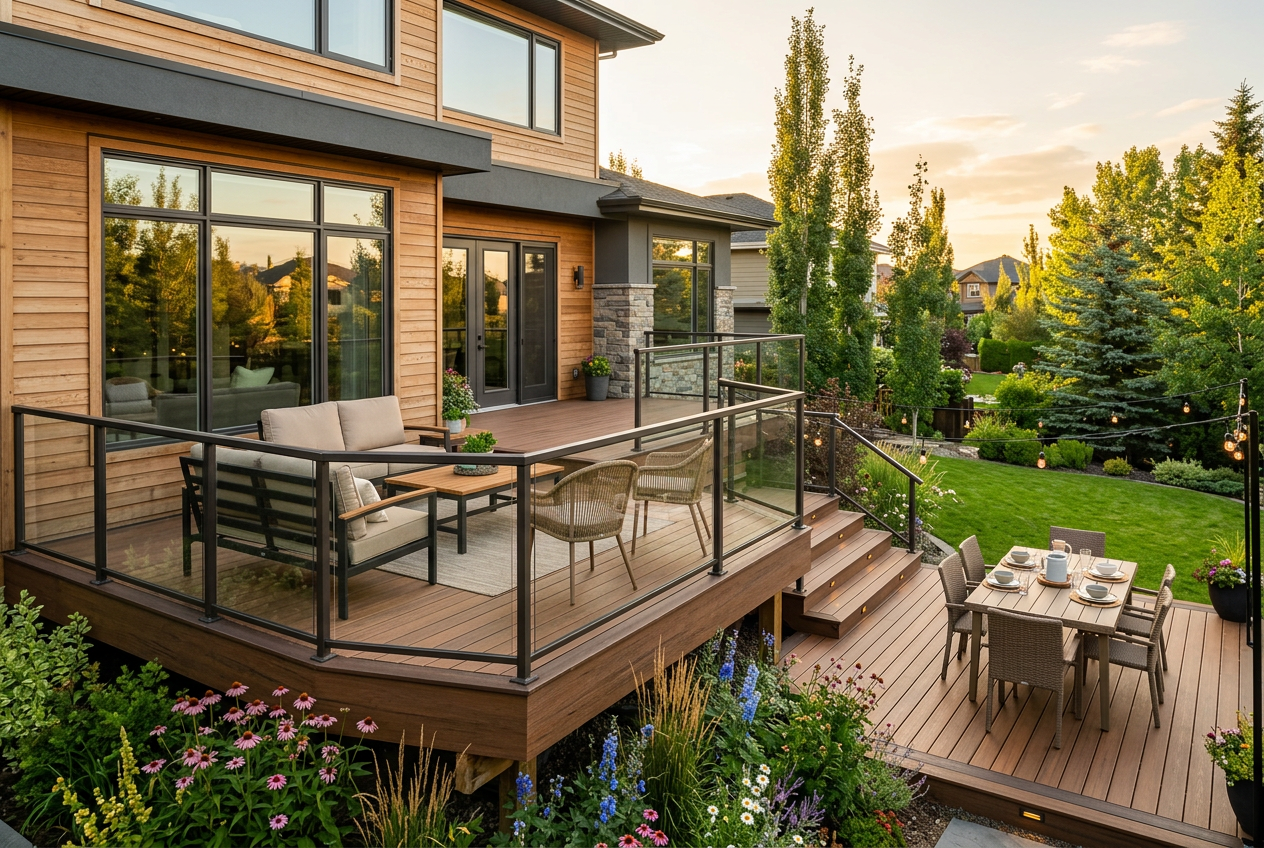
Modern composite (Trex, TimberTech) is what we recommend for most Alberta homes, and it's what the majority of our clients choose. Why:
- No staining, ever. Wash it in spring — done.
- Freeze-thaw stable. Capped boards don't absorb water, so they don't crack or splinter through winter cycles.
- UV-fade warranties. Premium lines carry 25–50 year fade and stain warranties.
- Hidden fasteners. No popped screws or nail heads working up through the surface.
Over 15 years, composite is usually cheaper than wood once you count stain, labour, and board replacement.
The Part That Matters More Than the Boards
Whatever surface you choose, the deck lives or dies by its foundation. We build on helical screw piles set below Edmonton's frost line — engineered, certified, and immune to the seasonal heaving that cracks deck blocks and shallow footings.
Planning a Deck This Year?
See our full deck design and construction service — composite and wood, railings, lighting, and multi-level builds across Edmonton, St. Albert, and the region. Or get a free estimate and we'll bring material samples to your backyard.